No, standard renters insurance does NOT cover pet damage to the carpet, flooring, walls, or any other part of your rental unit. Damage caused by your pet to the physical structure or fixtures of the property is considered neglect, wear and tear, or a maintenance issue, which are all excluded from coverage under both the personal property and liability sections of a renters policy. You are financially responsible for repairing this damage, and the cost will typically be deducted from your security deposit. However, renters insurance does cover liability if your pet injures someone or damages a visitor’s property. For the fundamentals, see our guide on what renters insurance is.
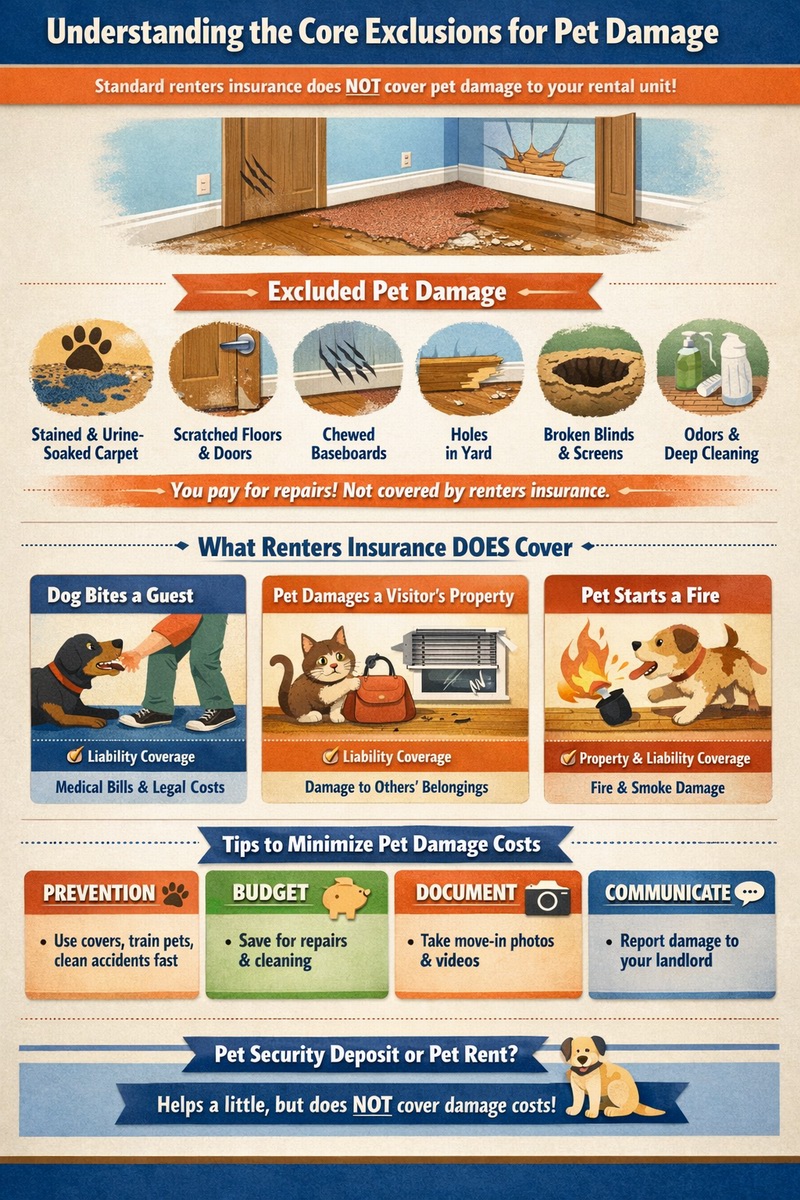
Understanding the Core Exclusions for Pet Damage
When asking “does renters insurance cover pet damage to carpet?” you’re dealing with one of the most common and clear-cut exclusions in property insurance. Renters insurance is designed for sudden, accidental losses from external perils (like fire, theft, or burst pipes). Damage caused by an animal you own and control is considered an internal, gradual, and preventable issue—the opposite of what the policy is meant to cover.
What Specific Pet Damages are Excluded?
Your renters policy will not pay to repair or replace:
– Stained, torn, or urine-soaked carpeting
– Scratched hardwood floors or doors
– Chewed baseboards, window sills, or cabinetry
– Holes dug in the yard
– Damage to blinds, curtains, or screens
– Any odors or damage requiring professional cleaning or remediation
These costs fall entirely on you as the pet owner. This is a critical distinction in understanding your renters insurance coverage limits.
The Landlord’s Perspective and Your Security Deposit
Your lease agreement almost certainly holds you responsible for any damage beyond “normal wear and tear.” Pet damage is explicitly beyond normal wear. Your landlord will assess the damage when you move out and deduct the repair or replacement costs from your security deposit. If the damage exceeds the deposit, they can legally bill you for the remainder.
What Renters Insurance DOES Cover Related to Pets
While it won’t fix your chewed-up baseboard, renters insurance provides vital protection for a much larger financial risk: liability. The personal liability coverage (Coverage E) in your policy is designed for incidents where you (or your pet) cause harm to others.
| Scenario | Covered by Renters Insurance? | Explanation |
|---|---|---|
| Your dog ruins the rental’s living room carpet. | NO | Damage to the dwelling you occupy is excluded. You are responsible. |
| Your dog bites a guest, requiring medical care. | YES (Liability) | Your liability coverage pays for the guest’s medical bills and your legal defense if sued. (Subject to breed exclusions). |
| Your cat scratches and ruins a visitor’s expensive leather purse. | YES (Liability) | Damage your pet causes to someone else’s property is covered under your liability coverage. |
| Your pet knocks over a candle, causing a fire. | YES (Property & Liability) | Fire is a covered peril. Your policy covers your damaged belongings. Liability may cover damage to the building and other units. |
| Pet odor removal from carpets when you move out. | NO | Considered a maintenance/cleaning issue, not a sudden loss. |
Breed Restrictions and Liability Coverage
It’s crucial to know that many insurers have breed restrictions for dogs (e.g., pit bulls, Rottweilers, etc.) and may exclude liability coverage entirely for incidents involving these breeds. You must disclose your pet to your insurer. If your pet is a restricted breed, you may need to seek a specialty insurer or a separate animal liability policy.
How to Financially Handle Pet Damage to Your Rental
Since insurance won’t cover it, you need a proactive plan to manage potential pet damage costs.
1. Prevention is the Best Policy:
– Use washable pet throws on furniture and area rugs over carpets.
– Keep claws trimmed, provide scratching posts, and use training to prevent chewing.
– Clean accidents immediately with enzymatic cleaners to prevent stains and odors.
– Use baby gates to restrict access to high-risk areas.
2. Budget for Repairs: Assume you will not get your full security deposit back. Start a small savings fund for potential damage repairs or professional cleaning when you move out.
3. Document the Original Condition: Take detailed, timestamped photos and videos of the entire unit during your move-in inspection. This provides a baseline to dispute excessive charges for pre-existing damage.
4. Communicate with Your Landlord: If damage occurs, report it and discuss repair options. Sometimes, arranging and paying for a repair yourself is cheaper than letting the landlord handle it and deduct an inflated cost from your deposit.
Does a Pet Security Deposit or Pet Rent Help?
Many landlords charge a non-refundable pet fee or monthly pet rent. These charges are for the privilege of having a pet and for expected additional wear—they do not pre-pay for specific damages. You are still responsible for the actual cost of repairs beyond that fee.
Are There Any Insurance Products for Pet Damage?
Standard renters and homeowners policies exclude it. However, you might encounter:
– Pet Damage Insurance (Rare): A few specialty providers or endorsements might offer limited coverage for pet damage to a rental, but they are uncommon and often expensive.
– Pet Liability Insurance: As mentioned, this covers injury or damage to others, not your own property.
The most practical “insurance” is your own savings and preventative measures. Understanding this can help you better manage your overall renters insurance cost expectations. For other protections, explore all renters insurance options.
Conclusion: You Are the Insurer for Pet Damage
In summary, does renters insurance cover pet damage to carpet? Emphatically, no. As a pet owner, you are personally responsible for any damage your animal causes to your rented dwelling. This financial responsibility is a key part of the cost of pet ownership. Protect yourself by focusing on prevention, maintaining open communication with your landlord, and setting aside funds for potential repairs. While your renters insurance won’t fix the stained carpet, ensure it has robust liability coverage to protect you from the far greater financial threat of a pet-related injury lawsuit. By understanding these boundaries, you can be a responsible pet owner and tenant.
Frequently Asked Questions (FAQ)
What if the pet damage is from a previous tenant? Am I responsible?
No, you are only responsible for damage that occurs during your tenancy. This is why a thorough move-in inspection and documentation are vital. If you are charged for pre-existing pet damage, you can dispute it with your landlord using your move-in photos as evidence.
Does renters insurance cover damage to my own furniture from my pet?
No. Damage your pet causes to your own personal property (like chewing your sofa or ruining your area rug) is also excluded under a standard renters insurance policy. This is considered a preventable, internal issue, not a covered peril.
Will my landlord’s insurance cover my pet’s damage?
No. The landlord’s property insurance covers the building structure against specific perils (like fire or storm). It has exclusions for damage caused by a tenant’s pets. The landlord will seek reimbursement from you, the tenant, for pet damage.
Can I be evicted for pet damage?
Yes, potentially. Significant or repeated pet damage can be considered a violation of your lease terms, which often require you to maintain the property in good condition. This could lead to a “cure or quit” notice or even eviction proceedings if not addressed.
Are emotional support or service animal damages treated differently?
While fair housing laws prevent landlords from charging pet fees or deposits for assistance animals, the tenant is still financially responsible for any damage the animal causes to the property. The exclusion for pet damage in renters insurance still applies.
What’s the best way to clean pet stains to avoid charges?
For new stains, blot (don’t rub) and use a high-quality enzymatic cleaner designed for pet urine, which breaks down the proteins and eliminates odors that regular cleaners miss. For set-in stains or odors, hiring a professional carpet cleaner who uses enzymatic treatment may be necessary to save your deposit.
Where can I find resources on responsible pet ownership in rentals?
For general advice on pets and housing, the Humane Society’s guide to renting with pets offers excellent tips on finding pet-friendly housing, understanding leases, and preventing damage, which complements the insurance information provided here.