
Understanding water backup coverage renters insurance is key to avoiding significant out-of-pocket expenses from a common exclusion in standard policies. This coverage is an add-on that protects your belongings and pays for cleanup if water or sewage backs up through drains, toilets, or sump pumps into your rental unit. Contrary to popular belief, even upper-floor apartments can be at risk due to interconnected plumbing systems. The coverage typically includes repairing or replacing damaged personal property, removing water and sewage, disinfecting the area, and sometimes covering additional living expenses if you are temporarily displaced. The cost is generally affordable, often adding only $20 to $50 per year to your premium, but provides critical financial protection against a messy and expensive disaster. Assessing your risk and adding this rider is a simple step for complete peace of mind.
What Is Water Backup Coverage in Renters Insurance?
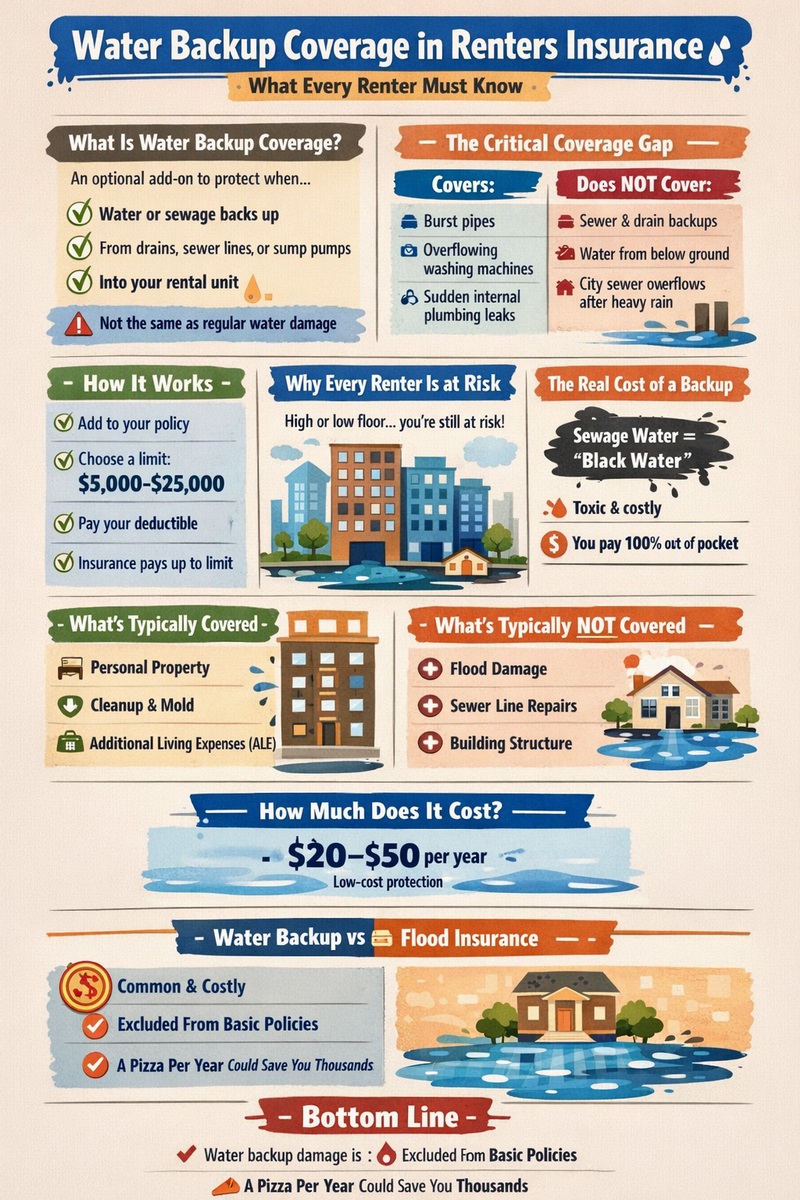
Water backup coverage is a specific endorsement or rider that you can add to a standard renters insurance policy. It is designed to cover losses caused when water or sewage backs up from a drain, sewer line, or sump pump into your living space. It’s crucial to understand that this is distinct from other types of water damage. A standard renters insurance policy typically covers sudden and accidental water discharge from within your unit, like an overflowing washing machine or a burst pipe in your wall. However, it explicitly excludes water that comes from outside the dwelling’s plumbing system or from below ground.
The Critical Gap in Standard Policies
Most basic renters insurance policies contain a clause that excludes damage from “water that backs up through sewers or drains” or “water below the surface of the ground.” This means if a city sewer main becomes overloaded during heavy rain and sends wastewater back into your apartment, your standard policy will not cover the ruin to your furniture, electronics, or clothing. This exclusion exists because such events are considered a separate, high-risk peril. Water backup coverage renters insurance is the solution, filling this exact gap and turning a potentially uncovered catastrophe into a manageable insured event.
How a Water Backup Endowment Works
When you purchase this add-on, you select a coverage limit, which is the maximum amount the insurance company will pay for a single water backup event. Limits commonly range from $5,000 to $25,000. After paying your deductible, the insurance will cover the costs to repair or replace your damaged personal property, clean up the water and sewage, sanitize affected areas, and possibly cover the cost to tear out and replace damaged flooring or drywall. It’s important to review the specific terms, as some policies may have restrictions on certain types of property, like valuable papers or items stored in a basement.
Why Every Renter Needs Water Backup Protection
Many renters mistakenly believe they are immune to sewer or drain backups, especially if they live on an upper floor. This assumption can lead to a rude and expensive awakening. The reality is that modern plumbing is interconnected, and a blockage or failure downstream can affect units far from the ground level. Investing in water backup coverage renters insurance is a proactive measure for several compelling reasons that go beyond simple geography.
You Are at Risk No Matter Your Floor
While ground-floor and basement units are most vulnerable, upper-level apartments are not safe. A major clog in a main stack pipe, which runs vertically through a building, can cause backups to overflow from toilets and sinks on any floor. Furthermore, if a backup floods a lower unit and the water seeps through ceilings and walls, it could damage your property as well. This interconnected risk makes the coverage relevant for virtually all renters in multi-unit buildings.
The Staggering Cost of Cleanup and Replacement
Sewage and drain water is categorized as “black water,” meaning it is highly contaminated and poses serious health risks. Professional cleanup is not a DIY project; it requires specialized equipment and hazardous material protocols. According to industry data, the average cost to professionally clean and restore a home after a sewage backup can easily run into the thousands of dollars, not including the value of destroyed belongings. Without water backup coverage renters insurance, these staggering costs fall entirely on you. For a deeper look at what is protected, you can explore typical renters insurance coverage details.
What Does Water Backup Coverage Actually Cover?
Knowing the specifics of what your policy will pay for is essential. Water backup coverage renters insurance is designed to handle the direct consequences of the backup event. Coverage generally falls into a few key categories, helping you recover both financially and physically from the incident.
Damage to Personal Property
This is the core of the coverage. It pays to repair or replace your belongings that are damaged or destroyed by the backing-up water and sewage. This includes furniture (sofas, beds, dressers), electronics (TVs, computers, game consoles), clothing, rugs, books, and other personal items. The coverage typically operates on a replacement cost value (RCV) basis if you have that option on your policy, meaning you get paid the amount to buy a new item of similar kind and quality, minus your deductible.
Cleanup, Removal, and Sanitization
Merely removing the water is not enough. The policy covers the expensive process of extracting the contaminated water, removing ruined flooring or drywall that cannot be salvaged, and thoroughly cleaning, disinfecting, and deodorizing the affected areas to make them safe and habitable again. This often involves industrial-grade equipment and antimicrobial treatments to prevent mold growth, which is a common secondary problem after water damage.
Additional Living Expenses (ALE)
If the damage from the backup is so severe that your rental unit becomes uninhabitable, your water backup coverage may extend to cover Additional Living Expenses. This can reimburse you for the extra costs incurred while you live elsewhere during repairs, such as hotel bills, restaurant meals (above your normal food budget), and storage fees. It’s important to check if your specific endorsement includes ALE or if it’s solely for property damage and cleanup.
Additional Living Expenses (if included)Intentional lack of maintenance by the landlord
| Typically COVERED | Typically NOT COVERED |
|---|---|
| Damage to personal property from sewer/drain water | Flood damage (requires separate flood insurance) |
| Professional water extraction and cleanup | The source of the backup (e.g., repairing the city sewer line) |
| Disinfection and mold remediation | Damage to the building structure (landlord’s responsibility) |
| Replacement of damaged drywall or flooring you own | Ground water seepage through walls or floors |
Cost and Considerations for Adding the Coverage
One of the most appealing aspects of water backup coverage renters insurance is its affordability relative to the protection it provides. The cost is influenced by several factors, but it remains one of the most cost-effective add-ons available. Understanding the pricing and key considerations will help you make an informed decision about the appropriate level of coverage for your situation.
How Much Does Water Backup Coverage Cost?
On average, adding water backup coverage to your renters policy costs between $20 and $50 per year. The final price depends on your chosen coverage limit, your deductible, your geographic location (risk of heavy rainfall or aging infrastructure), and the insurance carrier. For example, a $10,000 limit will cost less than a $25,000 limit. When considering the potential tens of thousands of dollars in loss it can protect against, this small annual premium is a wise investment. To get a full picture of pricing, you can review factors that influence renters insurance cost.
Choosing the Right Coverage Limit
Selecting an appropriate limit requires a realistic assessment of the value of your personal property and the potential cleanup costs. Create a home inventory to estimate the total value of belongings in areas vulnerable to a backup (like near floor drains). Remember to factor in the high price of professional remediation. While $5,000 might be sufficient for a minimalist, most renters should consider limits of $10,000 or more to ensure full protection. An insurance agent can help you evaluate your needs.
Water Backup vs. Flood Insurance: Knowing the Difference
It is critical not to confuse these two coverages. They protect against entirely different perils. Water backup coverage is for water that comes from a drain or sewer line. Flood insurance, which is a separate policy usually through the National Flood Insurance Program (NFIP), covers water that comes from outside, overflowing bodies of water, or ground saturation that enters the home. For comprehensive protection in high-risk areas, a renter might need both. For authoritative information on flood risks and insurance, you can refer to resources from FEMA.
Steps to Take if You Experience a Water Backup
If you face the unfortunate event of a sewer or drain backup in your rental, swift and correct action is vital to protect your health, mitigate damage, and ensure a smooth insurance claims process. Following a clear sequence of steps will help you navigate the crisis effectively.
Immediate Health and Safety Actions
First, treat the water as hazardous. Avoid contact with the water if possible, and do not use electrical appliances in standing water. If the backup is significant, you may need to turn off the main power to the unit from the circuit breaker for safety. Ventilate the area by opening windows if it is safe to do so. Immediately contact your landlord or property manager to report the issue, as they are responsible for stopping the source of the backup and repairing the building’s plumbing system.
Documenting the Damage for Your Claim
Before cleaning anything, thoroughly document the damage. Take extensive photographs and videos of the standing water, the damaged items, and the affected areas of the apartment. Create a detailed list of all damaged belongings, including descriptions, approximate age, and value if possible. This evidence is crucial when you file your claim with your insurance company. Move any salvageable items to a dry, safe area to prevent further damage.
Filing the Insurance Claim
Contact your insurance provider as soon as possible to start the claim. Provide them with all the documentation you’ve gathered. They will likely send an adjuster to assess the damage. Do not begin permanent repairs or discard ruined items until the adjuster has reviewed them, unless required for health and safety (in which case, document it first). Keep all receipts for any temporary repairs, cleaning supplies, or additional living expenses, as these may be reimbursable under your policy.
Conclusion
Water backup coverage renters insurance is a small addition that provides an enormous layer of financial security. It addresses a significant and common exclusion in standard policies, protecting you from the costly and unpleasant aftermath of sewer or drain backups. Whether you live in a basement apartment or on the top floor, the interconnected nature of plumbing systems means no renter is completely immune. For an affordable annual premium—often less than the cost of a single restaurant meal—you can secure thousands of dollars in protection for your personal property and avoid the burden of extreme cleanup costs. Review your current renters insurance policy today, speak with your agent about adding this essential endorsement, and gain the complete peace of mind that comes with knowing you are protected from all angles of water-related disasters.
Frequently Asked Questions (FAQ)
Does water backup coverage cover a toilet overflow?
It depends on the cause. If the toilet overflows due to a blockage in your specific toilet or the internal plumbing of your unit, it may be covered by the standard water damage portion of your renters policy. However, if the overflow is caused by a backup in the main sewer line that serves the entire building, then that damage would be covered by your water backup endorsement. The distinction lies in the source of the water.
I live on the third floor. Do I really need this?
Yes, you can still be at risk. While less common than in ground-floor units, backups can rise through the plumbing stack and affect upper floors. Furthermore, if a major backup floods lower units and the water travels upward through walls or ceilings, your property could sustain damage. The relatively low cost of the coverage makes it a prudent choice for most renters, regardless of floor level.
How is this different from flood insurance?
They are completely separate. Water backup coverage is for water that comes from inside a drain, sewer, or sump pump. Flood insurance covers water that comes from outside, such as overflowing rivers, storm surges, or heavy rain that accumulates on the ground and flows into your home. You may need both if you live in an area prone to flooding and sewer issues.
What is the typical deductible for water backup claims?
The deductible for a water backup claim is usually the same as the deductible on your main renters insurance policy. For example, if you have a $500 deductible, you would pay the first $500 of the covered loss, and your insurance would pay the remaining costs up to your coverage limit. Some policies may offer a separate deductible for this endorsement, so it’s important to check your policy details.
Can I add water backup coverage at any time?
Generally, you can add an endorsement like water backup coverage when you first purchase your policy or when you renew it. If you want to add it mid-term, you should contact your insurance company or agent. They can usually make the change, and the premium will be prorated. However, there is typically a waiting period (e.g., 15-30 days) before the new coverage goes into effect, to prevent immediate claims for existing problems.
Does it cover damage to the apartment building itself?
No. Renters insurance, including the water backup endorsement, is designed to protect your personal property and provide liability coverage. Damage to the physical structure of the apartment building (walls, floors permanently installed, plumbing systems) is the responsibility of your landlord and should be covered by their commercial property insurance policy.
What if the backup is caused by the landlord’s negligence?
Even if the backup is due to a landlord’s failure to maintain the plumbing, your water backup coverage would still apply to your personal property loss. Your insurance company would pay your claim, and then they might pursue a process called “subrogation” to recover the costs from the landlord or their insurance. This ensures you get paid quickly without having to directly sue your landlord.