
Foxen renters insurance represents a new wave of insurance technology (insurtech), leveraging artificial intelligence and a fully digital platform to offer policies that are dynamic, usage-based, and potentially more affordable for low-risk individuals. Unlike traditional insurers, Foxen uses an AI model to analyze various data points—potentially including smart home device data—to personalize pricing and encourage safer behavior through real-time feedback and micro-rewards. Coverage is standard (personal property, liability, loss of use) but is managed through a sleek app with features designed for modern renters. Key considerations include its current limited availability, the novelty of its AI pricing model, and the trade-off between potential savings and the data-sharing required. This review examines Foxen’s unique approach, coverage details, cost structure, and helps you decide if this tech-forward insurer is a viable choice for your renters insurance needs.
What Is Foxen Insurance? The AI-Driven Model
Foxen is a technology company first and an insurance carrier second, operating as a Managing General Agent (MGA) that underwrites policies through a partnered insurance company (often an A-rated carrier). Its core innovation is using artificial intelligence to create a more personalized and interactive insurance experience. The company’s premise is that traditional insurance, with its static annual premiums based on broad risk categories, is inefficient. Foxen’s AI aims to assess individual risk in near real-time, rewarding policyholders for safer habits with lower costs and proactive insights. This makes renters insurance not just a passive financial product but an engaged, data-driven service.
The “Active Insurance” Philosophy
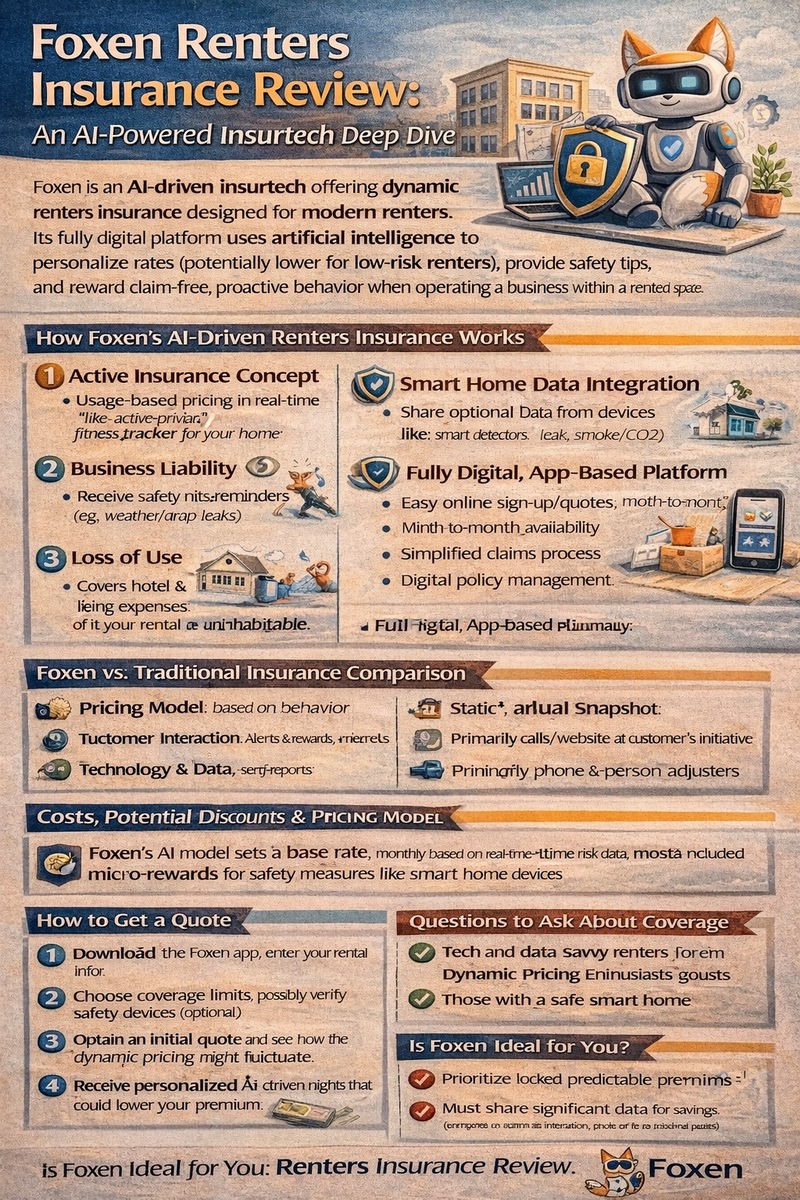
Foxen promotes the concept of “Active Insurance,” where your behavior and home environment directly influence your premium and your relationship with the insurer. The AI model may integrate data from optional sources like smart home devices (water leak sensors, smoke alarms), self-reported information, and external data sets to build a risk profile. In return, you might receive notifications about potential risks (e.g., “A pipe in your area froze last night, check your sinks”) or earn small rewards for verifying safety measures. This is a fundamental shift from the “set it and forget it” model of traditional insurance.
Licensing and Underwriting Backing
While Foxen is the customer-facing tech platform and brand, the actual insurance policy is issued by a licensed carrier. This is a common and legitimate structure in insurtech (similar to Lemonade’s partnership with reinsurers). It’s crucial to verify which carrier ultimately backs Foxen’s policies in your state, as this determines the financial strength rating and claims-paying ability. Always check for an A.M. Best rating of ‘A’ or better for the backing carrier.
Coverage, Policy Features, and the Digital Experience
Foxen renters insurance provides the standard trio of coverages but delivers and manages them through a distinctly modern digital interface with unique features.
Standard Coverage Components
The policy includes the essential protections:
- Personal Property Coverage: Protects your belongings from named perils like fire, theft, and vandalism.
- Personal Liability Coverage: Covers you if you’re found legally responsible for injury or property damage to others.
- Loss of Use/Additional Living Expenses (ALE): Pays for temporary housing if your rental is uninhabitable due to a covered loss.
- Medical Payments to Others: Covers minor medical bills for guests injured in your home.
Coverage limits and deductibles are customizable during the quote process. It’s important to scrutinize whether the default or offered coverage includes Replacement Cost Value (RCV) for personal property or if it’s Actual Cash Value (ACV). For a full breakdown of these elements, see our guide on renters insurance coverage.
The App-Centric Experience and AI Features
Foxen’s value proposition is deeply tied to its mobile application, which typically includes:
- Dynamic Premium Updates: Your rate may adjust periodically (e.g., monthly) based on AI risk assessment, rather than being locked for a full year.
- Safety & Prevention Insights: Receiving AI-generated tips and alerts related to weather, local crime, or home maintenance.
- Micro-Rewards Program: Earning small credits or discounts for completing safety “quests” or verifying that you have safety devices like smoke detectors.
- Simplified Claims: Filing and tracking claims entirely through the app, often with photo/video uploads and AI-assisted processing for speed.
- Digital Policy Management: Instant access to ID cards, policy documents, and easy changes to coverage.
| Feature | Foxen’s Approach | Traditional Insurer Comparison |
|---|---|---|
| Pricing Model | AI-driven, potentially dynamic/usage-based. | Static annual premium based on application snapshot. |
| Customer Interaction | App-based, proactive AI notifications & rewards. | Primarily reactive (calls/website at customer’s initiative). |
| Data Utilization | High – may use optional smart home data for risk assessment & pricing. | Low to Moderate – uses application info and credit-based scores. |
| Policy Personalization | High – aims to tailor rate to individual behavior. | Low – groups customers into broad risk categories. |
| Claims Process | Fully digital, AI-assisted for speed. | Mix of phone, online, and in-person adjusters. |
Costs, Discounts, and the AI Pricing Model
The cost of Foxen renters insurance is its most variable and discussed aspect due to the novel pricing algorithm. Understanding how it works is key to evaluating its value.
How AI Dynamic Pricing Might Work
Instead of a fixed annual premium, Foxen’s AI could set a base rate and then adjust it based on continuous risk assessment. Factors might include:
- Verified Safety Measures: Confirming you have working smoke/CO detectors, fire extinguishers, or smart leak sensors.
- Behavioral Data (if shared): Patterns from connected devices indicating you’re home regularly or that your home is maintained at safe temperatures.
- External Data: Changes in local crime statistics or weather patterns in your area.
- Claim-Free Periods: Like traditional insurers, staying claims-free would be rewarded, but potentially more immediately.
This could mean your bill fluctuates, potentially lower than traditional insurance if you’re low-risk, but also introduces uncertainty. For context on traditional pricing, see our analysis of renters insurance cost.
Potential Discounts and Savings Mechanisms
Foxen’s savings are likely baked into its dynamic model rather than as traditional “discounts.” You might save through:
- Micro-Rewards: Small, frequent credits for engaging with the app’s safety features.
- Bundling: If Foxen offers other products (like auto in the future), bundling may be available.
- Prepaid/Annual Payment: Paying upfront might offer a discount versus monthly payments.
The overarching “discount” is the fundamental premise: that by proving you’re a lower risk through data, you pay less than the average person in your demographic bracket.
Pros and Cons: Evaluating the Insurtech Trade-Off
Foxen renters insurance offers a compelling modern alternative but comes with trade-offs that won’t suit every renter.
Advantages (Pros)
- Potential for Lower Cost: For tech-savvy, low-risk individuals willing to share data and engage, premiums could be highly competitive.
- Proactive Risk Management: The AI insights could help you prevent losses before they happen, adding genuine value beyond insurance.
- Exceptional Digital Experience: The app is likely intuitive, fast, and designed for millennials and Gen Z renters.
- Transparent & Engaging: The model aims to make insurance feel less like a black box and more like a interactive service.
- Fast, Digital Claims: Leveraging AI and photo-based claims can lead to remarkably quick payouts for straightforward losses.
Potential Limitations and Concerns (Cons)
- Limited Availability: As a newer insurtech, Foxen is likely only available in a select number of states. You must check if it operates in yours.
- Pricing Uncertainty: Dynamic pricing can be less predictable than a locked annual rate. Your rate could increase based on factors you don’t fully control.
- Data Privacy Questions: The model requires sharing significant data. You must be comfortable with how your behavioral and home data is used, stored, and protected.
- Novelty & Long-Term Viability: The company and its AI model are unproven over the long term compared to century-old carriers.
- Less Human Interaction: If you prefer speaking to a local agent for complex advice or claims, the fully digital model may feel impersonal or insufficient.
- Coverage Limitations: As a streamlined digital provider, they may offer fewer niche endorsements (e.g., for very high-value collectibles) compared to large traditional carriers.
How to Get a Quote and What to Ask
If Foxen’s model appeals to you, the process to explore it is entirely digital but requires careful attention to details.
The Online Quote Process
You’ll start on Foxen’s website or via its app. The process will involve:
- Entering your rental address and personal details.
- Selecting coverage limits and deductibles.
- Possibly connecting to smart home devices (optional but likely incentivized).
- Receiving an initial quote and explanation of how the dynamic pricing might work.
The quote should clearly state the backing insurance carrier and whether the coverage is RCV or ACV.
Critical Questions to Consider (Even if Asked Digitally)
As you proceed, ensure you find answers to these key points:
- “Which licensed insurance carrier ultimately issues this policy?”
- “Is personal property coverage Replacement Cost (RCV) or Actual Cash Value (ACV)?”
- “How frequently can my premium change, and what are the primary factors that cause it to increase or decrease?”
- “What is your claims process, and what is the average payout time for a simple claim?”
- “How is my data used, stored, and protected? Do you sell my data to third parties?”
- “Are there any specific exclusions or limitations in the policy that differ from a standard HO-4 form?”
For independent information on insurtech and data use, resources like the National Association of Insurance Commissioners (NAIC) provide valuable context.
Alternatives and Final Verdict
Foxen renters insurance is one player in a growing field of digital and AI-driven insurers. It’s vital to compare it to the broader market.
Comparison to Other Digital Insurers
- vs. Lemonade: Both are digital-first. Lemonade uses AI for claims and takes a flat fee, donating leftover premiums. Foxen’s AI focuses more on dynamic pricing and prevention. Lemonade has wider availability.
- vs. Traditional Carriers with Apps (State Farm, Allstate): These offer robust digital tools but with traditional pricing and the option for local agent support. They have more policy options and longer track records.
- vs. Other Insurtechs (Hippo, Jetty): Hippo emphasizes smart home integration and prevention but with more fixed pricing. Jetty often focuses on flexible lease-related products.
Who Is Foxen Renters Insurance Best For?
Foxen is an excellent fit for:
- Tech-Forward Renters: Those comfortable with apps, AI, and smart home technology.
- Data-Confident Individuals: People not concerned with sharing data for personalized services.
- Low-Risk, Engaged Tenants: Those who actively maintain a safe home and want to be rewarded for it.
- Renters Seeking Modern Experience: Those who value a sleek, proactive digital service over a traditional agent relationship.
Who Should Look Elsewhere?
Consider other options if you:
- Prioritize price stability and predictability above all.
- Have significant privacy concerns about data sharing.
- Need complex coverage or high-limit endorsements.
- Prefer to build a relationship with a local insurance agent.
- Live in a state where Foxen is not yet available.
Conclusion
Foxen renters insurance is a fascinating and innovative entry into the market, pushing the boundaries of how insurance is priced and experienced. Its AI-driven, dynamic model offers the potential for real savings and valuable risk prevention for the right customer. However, its novelty, data dependency, and potential for pricing variability mean it’s not for everyone. Before choosing Foxen or any modern insurtech, carefully weigh the trade-offs between cutting-edge features and traditional stability. The most important step is ensuring you have adequate renters insurance coverage in place. If Foxen’s vision aligns with your lifestyle and comfort level, it’s certainly worth exploring a quote to see if their technology can deliver a better, more personalized value for your protection needs.
Frequently Asked Questions (FAQ)
Is Foxen a legitimate insurance company?
Foxen is a legitimate insurtech company operating as a Managing General Agent (MGA). It sells insurance policies that are ultimately underwritten by a licensed, admitted insurance carrier (which you should verify). It is not a scam, but as a newer company, it lacks the long-term historical track record of major carriers.
How does Foxen’s AI actually lower my premium?
The AI aims to identify you as a lower risk than the average person in your statistical group. It does this by verifying safety measures (through app check-ins or smart home data) and potentially observing low-risk behavioral patterns. By proving you’re less likely to file a claim, the model can offer you a lower rate than the “average” rate for your demographic and location.
Will my rate go up if I don’t use smart home devices?
Not necessarily. Using smart home devices is likely optional but incentivized (you might get a better rate or rewards). Your base rate would be set using other available data. However, renters who opt into sharing more data and verifying safety may achieve the lowest possible rates under this model.
Can I cancel my Foxen policy easily?
Yes, as a fully digital provider, cancellation should be a straightforward process within the app or website, similar to signing up. Standard rules apply: you should cancel effective at the end of a policy period to avoid short-rate cancellation fees, and you are entitled to a prorated refund of any prepaid premium.
What happens if Foxen goes out of business?
Your insurance policy is with the backing carrier (e.g., “Insurance Company XYZ”), not Foxen the technology platform. If Foxen ceased operations, the backing carrier would be obligated to continue covering you for the remainder of your policy term and would likely transfer policy administration to another agent or directly to themselves. Your coverage remains intact.
How are claims handled with an AI insurer?
You file the claim through the app, often by submitting photos/video and a description. Foxen’s AI would likely assess the claim for fraud and straightforward approval. If approved, payment is issued digitally, potentially very quickly. For complex or large claims, a human adjuster would still be involved in the process, but the initial intake and triage are AI-powered.
Is Foxen available in my state?
Availability is limited and expanding. You must visit the Foxen website or app and enter your ZIP code to see if they offer quotes in your state. Insurtechs typically roll out state-by-state due to different insurance regulations.