
Finding effective ways to lower renters insurance cost is a top priority for savvy renters. Fortunately, insurance doesn’t have to break the bank. With the right strategies, you can significantly reduce your premium while maintaining excellent coverage. This guide reveals 15 proven methods, from simple discounts to strategic policy changes. You’ll learn how to leverage bundling, security features, and smart shopping to save money every month. Let’s explore the best ways to lower renters insurance cost and put more cash back in your pocket.
1. Bundle Your Policies for Instant Savings
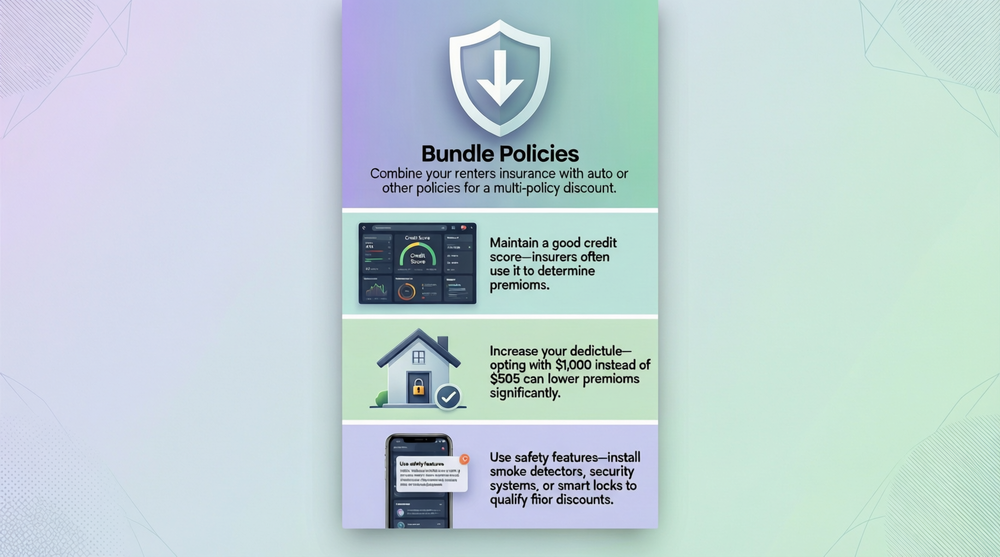
This is one of the easiest and most effective ways to lower renters insurance cost. Most major insurers offer a multi-policy or “bundling” discount. Typically, you save 10% to 25% when you purchase your renters and auto insurance from the same company.
2. Install Safety and Security Devices
Insurance companies reward risk reduction. By making your rental safer, you become a lower-risk customer. Installing certain devices can qualify you for discounts.
Devices That Typically Earn Discounts:
- Smoke Alarms & Fire Extinguishers: Basic but essential. Ensure they are functional.
- Deadbolt Locks & Security Systems: A monitored alarm system can save you 5% or more.
- Water Leak Sensors: These prevent costly water damage, which insurers appreciate.
Always notify your insurer about any installed safety features. For a deeper understanding of your policy, see our guide on renters insurance coverage.
3. Raise Your Deductible Wisely
Your deductible is the amount you pay out-of-pocket before insurance kicks in. Choosing a higher deductible lowers your premium. This is a powerful but calculated way to lower renters insurance cost.
| Deductive Amount | Estimated Annual Premium | Best For |
|---|---|---|
| $500 | $180 | Those who prefer lower upfront cost if a claim occurs. |
| $1,000 | $150 | Savers who can cover the higher deductible in an emergency. |
| $2,500 | $120 | Individuals with a strong emergency fund seeking maximum savings. |
Important: Only raise your deductible to an amount you can comfortably afford to pay today.
4. Shop and Compare Quotes Annually
Loyalty doesn’t always pay in insurance. Premiums and discounts change. One of the most effective ways to lower renters insurance cost is to compare quotes from at least three different companies every year.
5. Maintain a Good Credit Score
In most states, insurers use credit-based insurance scores to set rates. A higher score suggests you are financially responsible and less likely to file a claim. Improving your credit score is a long-term but highly effective way to lower renters insurance cost.
Quick Credit Tips:
- Pay all bills on time.
- Keep credit card balances low.
- Avoid opening several new credit accounts at once.
6. Ask About Every Possible Discount
Insurers offer dozens of niche discounts that agents might not mention upfront. Be proactive and ask. Here are common ones:
- Claims-Free Discount: For going a certain period without a claim.
- Non-Smoker Discount: Smoking increases fire risk.
- Professional/Employer Group Discount: For being a member of certain organizations or alumni associations.
- Paperless/Pre-Pay Discount: For going digital or paying your annual premium in full.
7. Accurately Value Your Belongings (Don’t Over-Insure)
Your premium is based on the amount of personal property coverage you choose. If you overestimate the value of your stuff, you overpay. Conduct a realistic home inventory. Add up the actual cash value (depreciated value) of your possessions.
For more on determining what you need, check our resource on what renters insurance is.
8. Consider a Less Expensive Neighborhood or Building
Location significantly impacts your rate. Insurers assess the crime rate and fire protection services (like proximity to a fire station) in your ZIP code. While not always practical, choosing a safer neighborhood or a building with fire sprinklers are long-term ways to lower renters insurance cost.
9. Pay Your Premium Annually Instead of Monthly
Many companies charge installment fees for monthly payments. Paying the full annual premium upfront can save you $25-$50 in fees per year. It’s a simple switch for immediate savings.
10. Stay With the Same Insurer (Longevity Discount)
While shopping is important, some companies offer a “loyalty” or “renewal” discount for staying with them for several consecutive years. Ask your current insurer if they have such a program before you switch.
11. Avoid Making Small Claims
Filing frequent small claims labels you as high-risk. This can lead to premium increases or even non-renewal. Use insurance for significant losses. For small repairs, consider paying out-of-pocket to protect your long-term rates. This is a strategic way to lower renters insurance cost over time.
12. Review and Adjust Your Liability Limits
While having high liability limits ($300,000+) is wise, you may be paying for more than you need if you have few assets. Discuss your specific situation with an agent. Ensure your limits are adequate but not excessive for your current financial profile.
13. Look for Association or Alumni Discounts
Many insurers partner with groups. Are you a union member, a graduate of a specific university, or a member of a professional organization? You might qualify for a group discount on renters insurance. Check your member benefits.
14. Choose a Policy with the Right Type of Coverage
Actual Cash Value (ACV) policies are cheaper than Replacement Cost Value (RCV) policies. ACV pays the depreciated value of your item. RCV pays to buy a new one. Opting for ACV can lower your premium, but understand you’ll receive less money if you file a claim.
15. Get a Quote from a Digital/Niche Insurer
Newer, digital-first insurance companies often have lower overhead costs. They sometimes pass these savings to customers in the form of lower premiums. It’s worth getting a quote from a tech-driven provider like Lemonade or others to compare. For a broad overview of providers, start at Tejribati’s home page.
Final Summary: Lower Your Bill Starting Today
In conclusion, there are numerous effective ways to lower renters insurance cost. Start with the quick wins: ask about every discount, bundle policies, and install safety devices. Then, move to strategic steps: shop around annually, adjust your deductible, and maintain good credit. By implementing even a few of these strategies, you can achieve significant savings without compromising your financial protection. Take control of your renters insurance cost today and enjoy the peace of mind that comes with both coverage and savings.
Frequently Asked Questions (FAQ) About Saving on Renters Insurance
Q1: What is the single biggest way to lower my renters insurance cost?
A: Bundling your renters policy with your auto insurance at the same company typically provides the largest immediate discount, often 15% or more on both policies.
Q2: Will improving my credit score really lower my premium?
A: Yes, in most states. Insurers have found a strong correlation between good credit and fewer claims. According to a study by the Insurance Information Institute, maintaining good credit can lead to significantly lower insurance premiums across all lines of coverage.
Q3: How often should I shop for new renters insurance quotes?
A: We recommend shopping around every 12-24 months. Market rates and your personal circumstances change. An annual check ensures you’re still getting the best rate for your needs.
Q4: Is it worth filing a small claim to get my money’s worth?
A: Generally, no. Filing a small claim can lead to a premium increase that outweighs the payout. It may also make it harder to get affordable insurance later. Save insurance for catastrophic losses.
Q5: Do all security systems qualify for a discount?
A: Not all. Usually, the discount applies to systems that are professionally monitored and centrally station-connected. Simple local alarms may not qualify. Always confirm with your specific insurance company.
Q6: Can I lower my cost if I don’t own much stuff?
A: Absolutely. The less personal property coverage you need, the lower your premium. Conduct a realistic inventory and only insure the value of what you own. Don’t overestimate.
Q7: If I raise my deductible from $500 to $1000, how much will I save?
A: Savings vary by insurer and location, but you can typically expect a 10% to 15% reduction in your annual premium. For a $200 annual policy, that’s a $20-$30 savings.