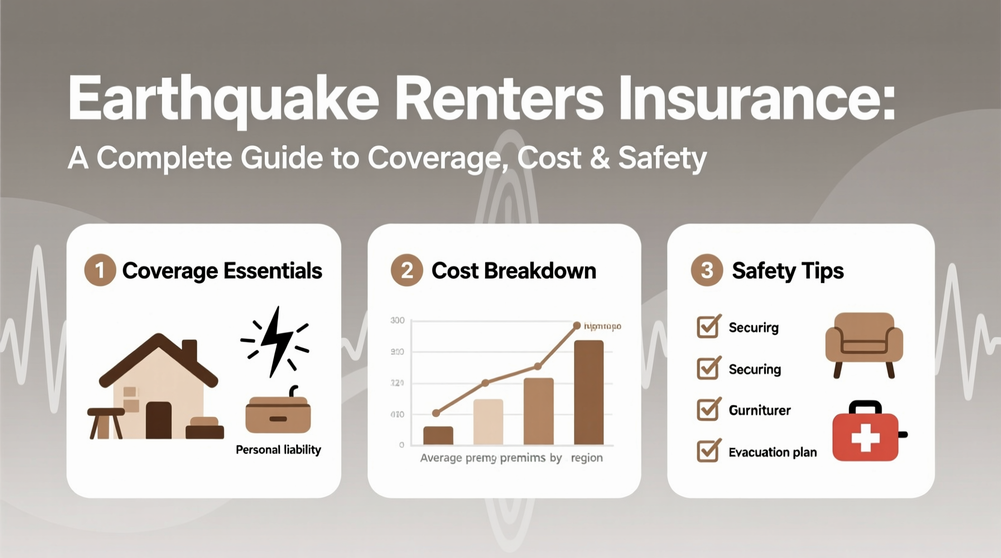

Article Summary: If you believe your standard policy protects you, think again: standard earthquake renters insurance does not exist within a typical policy. Earthquake damage is almost universally excluded, requiring a separate endorsement or policy. This comprehensive guide explains why this specialized coverage is critical, even in moderate-risk states, detailing what earthquake endorsements cover (from personal property to additional living expenses), how deductibles work (often a percentage, not a flat fee), and what it typically costs. We’ll explore the specific seismic risks across different U.S. regions and provide actionable steps to secure the right earthquake renters insurance protection, ensuring your belongings and finances are safeguarded when the ground shakes.
Why Standard Renters Insurance Excludes Earthquakes
Understanding this fundamental gap in your standard policy is the first step to proper protection.
The Standard Policy Exclusion
Open your standard renters insurance policy and you will find a clear “earthquake exclusion.” This means if an earthquake damages your TV, furniture, or other belongings, your insurer will not pay to repair or replace them. Similarly, if the quake forces you to temporarily live elsewhere, your policy’s standard Loss of Use coverage will not apply. This exclusion exists because earthquakes present a catastrophic, correlated risk—they can cause widespread damage to thousands of policies at once, posing a severe financial threat to insurers.
What About “Earthquake Damage” from Other Causes?
A critical nuance involves “fire following earthquake.” If an earthquake breaks a gas line and causes a fire that burns your belongings, that loss may be covered under your standard policy’s fire coverage. However, proving the direct cause was the fire (a covered peril) and not the initial quake (an excluded peril) can lead to complex claims disputes. The initial physical damage from the shaking itself remains excluded.
How Earthquake Renters Insurance Coverage Works
To close this protection gap, you must purchase an earthquake endorsement added to your existing policy or a separate, stand-alone earthquake policy.
What an Earthquake Renters Insurance Endowment Typically Covers
Adding earthquake protection modifies your policy to include the following for quake-related damage:
- Personal Property: Repair or replacement of your belongings damaged by seismic shaking or by a landslide directly caused by the quake.
- Loss of Use/Additional Living Expenses (ALE): Covers extra costs like hotel stays, meals, and storage if your rental unit is uninhabitable.
- Building Property Improvements: May cover upgrades you’ve made to the rental unit (like custom built-in shelves) that are typically the landlord’s responsibility but were damaged.
- Limited Liability: May provide protection if the earthquake causes damage to a neighbor’s property for which you are found liable (a rare but possible scenario).
The Unique Percentage Deductible
This is the most defining and often surprising feature of earthquake renters insurance. Instead of a flat dollar amount (e.g., $500), earthquake deductibles are usually a percentage of your total personal property coverage limit.
| Your Personal Property Coverage Limit | Example Earthquake Deductible (10%) | What You Pay Out-of-Pocket Before Insurance Pays |
|---|---|---|
| $20,000 | 10% | $2,000 |
| $50,000 | 10% | $5,000 |
| $75,000 | 15% | $11,250 |
This structure means you are primarily insured against a major, catastrophic loss, not minor damage. Deductibles typically range from 5% to 25%.
Common Exclusions Within Earthquake Renters Insurance Policies
Even earthquake-specific coverage has limits. Common exclusions include damage from flood or tsunami that occurs after the quake, damage to vehicles (covered by auto insurance, if you have comprehensive coverage), and often, breakables like glassware or china unless specifically scheduled.
Cost of Earthquake Renters Insurance by Region
The renters insurance cost for adding earthquake coverage varies dramatically based on your location’s seismic risk.
High-Risk Regions (e.g., California, Alaska, Washington, Oregon)
In these areas, adding an earthquake endorsement is more common but also more expensive. Annual premiums might range from $100 to $400, with higher deductibles (15-25%). The California Earthquake Authority (CEA) is a major provider of stand-alone policies in that state, offering clear, standardized options for renters.
Moderate-Risk Regions (e.g., Missouri, South Carolina, Utah, Nevada)
Areas with known fault lines (like the New Madrid Seismic Zone) have a significant, if less frequent, risk. Here, coverage is often very affordable, sometimes adding only $20 to $100 per year to your premium, with deductibles in the 5-15% range. The low cost belies the real risk, making it a high-value addition.
Lower-Risk Regions (e.g., Midwest, Northeast, Southeast)
While considered lower risk, no state is immune. Insurers in these regions may still offer the endorsement, often for a minimal fee ($10-$50 per year). The key question is availability, as not all companies offer it in low-risk zones. It’s a classic case of “it’s better to have it and not need it.”
Is Earthquake Coverage Required for Renters?
Unlike renters insurance itself, earthquake coverage is almost never mandated by a landlord or state law. The decision rests entirely with you, the tenant. It is a voluntary, risk-based financial decision. Your landlord’s property insurance for the building likely excludes earthquakes as well, meaning they would bear the cost of structural repairs, but that provides no protection for your personal possessions or temporary living costs.
How to Get Earthquake Renters Insurance: A Step-by-Step Guide
1. Assess Your Seismic Risk
Use tools from the U.S. Geological Survey (USGS) to understand your area’s hazard level. Don’t assume “it can’t happen here.” Historical quakes have struck unexpected regions, causing billions in damage.
2. Contact Your Current Renters Insurance Provider
Start by asking your existing insurer if they offer an earthquake endorsement for your policy. This is usually the simplest and potentially cheapest way to add it. Inquire about the cost, deductible percentage, and coverage specifics.
3. Shop for Stand-Alone Policies (If Needed)
If your insurer doesn’t offer it or the terms are unfavorable, seek a stand-alone policy. In California, the CEA is the primary market. In other states, specialty insurers or larger national carriers may offer options.
4. Evaluate the Policy Details Carefully
Compare more than just price. Scrutinize the deductible percentage, what perils are covered (shaking, landslide, fire following), coverage sub-limits for certain items, and the financial strength rating of the insurer (from agencies like A.M. Best).
5. Secure Your Belongings & Document Everything
Mitigation can support your claim and keep you safe. Secure heavy furniture and appliances to walls, use museum putty for valuables, and know how to shut off gas and water. Most importantly, maintain a current, cloud-based home inventory with photos/video and receipts to prove ownership and value after a disaster.
Conclusion
Securing earthquake renters insurance is a proactive and prudent step for tenants across the United States. The exclusion in standard policies is a significant vulnerability that can leave you facing massive out-of-pocket costs after a seismic event. While the unique percentage deductible means this coverage is designed for major losses, its relatively low annual cost—especially in moderate and low-risk zones—makes it an outstanding value for the financial security it provides. By understanding your risk, shopping for the right endorsement or policy, and combining it with practical preparedness steps, you transform your rental home into a more resilient space, ensuring that your belongings and finances are protected when the unexpected occurs.
Earthquake Renters Insurance FAQ
1. Is earthquake insurance worth it for renters in low-risk areas?
Yes, it can be. Given the very low annual premium (often $20-$50), it provides catastrophic financial protection for a potentially devastating, albeit unlikely, event. The cost is minimal compared to the total replacement cost of all your belongings.
2. Does earthquake renters insurance cover tremors or aftershocks?
Yes, standard earthquake policies cover all seismic events associated with the main quake, including foreshocks, the main shock, and aftershocks, typically within a defined “event period” (e.g., 72 hours or one week). All damage during this window is considered part of one event and subject to a single deductible.
3. What if my landlord has earthquake insurance on the building?
Your landlord’s policy covers only the structure of the building (walls, roof, built-in appliances). It provides zero coverage for your personal property, additional living expenses, or personal liability related to the quake. You need your own renters insurance coverage endorsement.
4. Can I get earthquake insurance if I live in a high-risk zone like California?
Absolutely. It is widely available, primarily through the state-managed California Earthquake Authority (CEA). Most major insurers in California are CEA participants and can sell you a CEA policy. Coverage options and deductibles are standardized.
5. How does the claims process work for earthquake damage?
After ensuring safety, you would:
- Document all damage with photos/video before cleaning up.
- Contact your insurer to start a claim.
- Work with an adjuster, who will assess the damage and apply the percentage deductible to your total covered loss to determine the payout amount.
- For Replacement Cost coverage, you may receive the depreciated value first, then the balance after you replace items and submit receipts.
6. Are there any discounts available for earthquake insurance?
Discounts are less common than for standard policies. However, some insurers may offer a slight premium reduction if your rental building is newer and built to modern seismic codes, or if you retrofit your personal living space (e.g., securing a large bookshelf to the wall). Bundling with your existing policy may also offer a small discount.
7. What’s the difference between an “endorsement” and a “stand-alone policy”?
An endorsement (or rider) is an add-on to your existing renters policy, seamlessly integrating coverage. A stand-alone policy is completely separate, purchased from a different entity (like the CEA). Stand-alone policies are common in the highest-risk areas where your primary insurer may not offer an endorsement.