
Understanding the specifics of your renters insurance policy is the key to ensuring you have the right protection for your unique situation. State Farm Renters Insurance coverage provides a robust foundation of protection for tenants, backed by one of the largest and most recognized insurers in the nation. A standard State Farm policy goes beyond just covering your belongings; it offers a comprehensive safety net that includes personal liability, medical payments, and loss of use benefits. This guide will provide a thorough examination of each component of State Farm Renters Insurance coverage, from standard inclusions to valuable optional endorsements. We will explain coverage limits, deductibles, and exclusions, and provide practical advice on how to tailor your policy to match your lifestyle, ensuring you can rent with confidence knowing exactly what is protected.
The Core Components of State Farm Renters Insurance Coverage
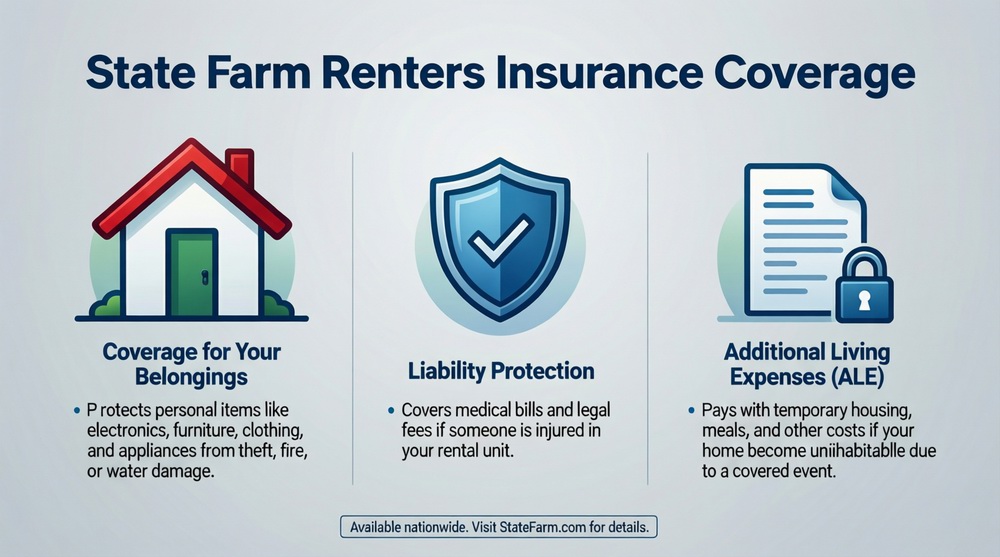
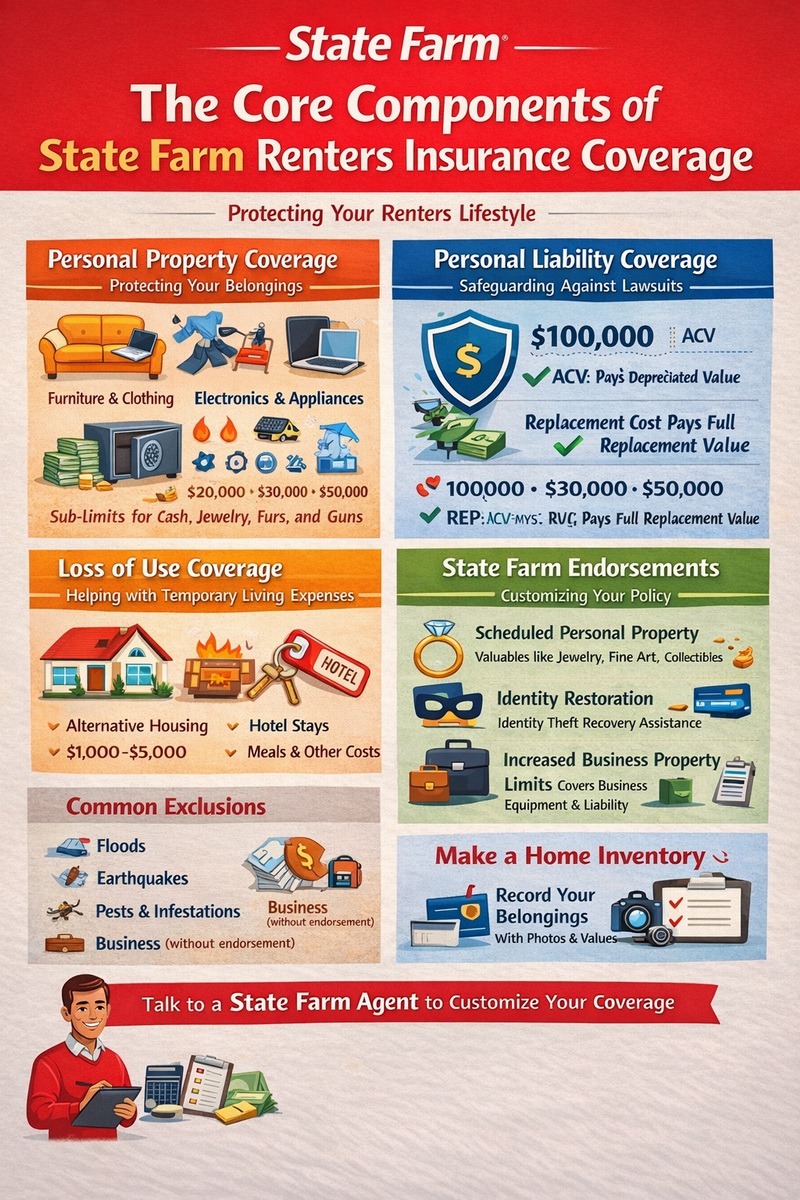
State Farm Renters Insurance coverage is built upon several core components that work together to protect you from financial loss. The most familiar part is personal property coverage, which protects your belongings—such as furniture, clothing, electronics, and appliances—against named perils like fire, theft, vandalism, windstorm, and more. It is crucial to know that State Farm policies typically offer both Actual Cash Value (ACV) and Replacement Cost coverage options, with Replacement Cost being the superior choice as it pays to replace items with new ones, not their depreciated value. The second critical component is personal liability coverage, which protects you if you are found legally responsible for bodily injury to others or damage to their property. This can cover legal defense costs, settlements, and medical expenses. Finally, loss of use coverage, also called additional living expenses, helps pay for temporary housing, meals, and other costs if your rental becomes uninhabitable due to a covered loss.
Personal Property Coverage: Protecting Your Belongings
Diving deeper into personal property coverage, a key aspect of State Farm Renters Insurance coverage, requires understanding limits and special sub-limits. When you purchase a policy, you select a total amount of coverage (e.g., $20,000, $30,000, $50,000). However, certain categories of items have internal limits. For example, there are typically sub-limits for cash, precious metals, jewelry, watches, furs, and firearms. If you own valuable items that exceed these sub-limits, you must schedule them separately with a Personal Articles Policy (PAP) to ensure full coverage. State Farm also extends personal property coverage off-premises, meaning your belongings are usually protected anywhere in the world—if your laptop is stolen from your car or while traveling, it is likely covered. For a foundational understanding of this protection, learn more about what renters insurance is and how it applies to your possessions.
Liability and Medical Payments to Others
The liability portion of State Farm Renters Insurance coverage is arguably as important as property protection. It provides a crucial financial shield for your assets and future income. If a guest slips and falls in your apartment, or if your child accidentally damages a neighbor’s expensive artwork, you could be held liable. The liability coverage helps pay for the associated medical bills, legal fees, and court-ordered judgments, up to the limit you select (commonly $100,000, $300,000, or more). Medical payments to others is a separate, smaller coverage (usually $1,000 to $5,000 per person) that pays for minor medical expenses for guests injured on your property, regardless of who was at fault. This can help avoid minor incidents escalating into larger liability lawsuits. Understanding these components is essential for appreciating the full scope of your renters insurance coverage.
Enhancing Your Policy with State Farm Endorsements
While the standard policy offers strong protection, State Farm Renters Insurance coverage can be significantly enhanced with a variety of endorsements (also called riders). These add-ons allow you to customize your policy to fit your specific needs. The most common and valuable endorsement is for Replacement Cost coverage on your personal property, which is highly recommended over the standard ACV. For high-value items like engagement rings, musical instruments, collectibles, or high-end cameras, a scheduled Personal Articles Floater (PAF) or Personal Articles Policy (PAP) provides broader protection (often covering accidental loss and mysterious disappearance) and an agreed-upon value. Other useful endorsements include identity restoration coverage, which provides expert help and expense reimbursement if your identity is stolen, and business property coverage increases for those who work from home. Discussing these options with your State Farm agent is key to building a truly comprehensive policy.
Scheduled Personal Property and Valuables
For items whose value exceeds standard sub-limits, scheduling them is a non-negotiable part of adequate State Farm Renters Insurance coverage. Common categories include jewelry (especially engagement and wedding rings), fine art, antiques, collectibles (like coins or stamps), musical instruments, and high-end sports equipment. To schedule an item, you will typically need a recent appraisal or receipt to establish its value. In return, the item receives “all-risk” coverage, meaning it is protected against a much wider range of perils, including accidental loss. There is also often no deductible applied to claims on scheduled items. This process ensures that your most prized and expensive possessions are fully protected, providing peace of mind that a standard policy alone cannot offer.
Identity Restoration and Additional Living Expense Extensions
Modern risks require modern coverage. State Farm’s Identity Restoration endorsement is a proactive addition to your renters insurance. If you become a victim of identity theft, this coverage can provide access to specialists who help restore your credit and identity, and it can reimburse you for lost wages, notary fees, and postage costs associated with the recovery process. Another important consideration is your Additional Living Expenses (ALE) limit. While standard ALE is a percentage of your personal property limit, you can often increase this limit for a small additional premium. This is a wise move if you live in an area with high hotel and restaurant costs, ensuring you can maintain your standard of living if displaced from your home for an extended period.
What State Farm Renters Insurance Does Not Cover
Equally important as understanding what is covered is knowing what is excluded under State Farm Renters Insurance coverage. Standard policies do not cover damage caused by floods or earthquakes; separate policies or endorsements are required for these perils. Damage from pests, such as bed bugs, rodents, or insects, is also excluded, as is general wear and tear. Intentional damage caused by you or a resident of your household is not covered. Furthermore, if you operate a business from your home, business liability and most business property are excluded unless you purchase specific business endorsements. It is also critical to understand that standard policies have limitations on certain high-risk personal property items, as mentioned, which is why scheduling is necessary. Reviewing your policy’s exclusions section with your agent ensures there are no unexpected gaps in your protection.
Common Exclusions and How to Address Them
To avoid a coverage surprise, be proactive about common exclusions. For flood coverage, you must purchase a separate policy through the National Flood Insurance Program (NFIP), which State Farm agents can help you obtain. For earthquake coverage, inquire if an endorsement is available in your state or if a separate policy is needed. If you run a business, even a small one, discuss a Business Pursuits endorsement to cover your equipment and provide some liability protection. For high-value items, the scheduling process directly addresses the sub-limit exclusions. Regularly reviewing your policy and communicating major life changes or new acquisitions to your State Farm agent is the best way to ensure your State Farm Renters Insurance coverage evolves with your life and that all gaps are properly managed. For more insights on managing insurance costs, including for additional policies, see our guide on renters insurance cost factors.
The Importance of Conducting a Home Inventory
One of the most practical steps you can take to maximize the effectiveness of your State Farm Renters Insurance coverage is to create and maintain a detailed home inventory. This is a list, with photos or video, of your major possessions, along with their estimated value, make/model, and serial numbers. State Farm offers a free digital home inventory tool to make this process easier. An inventory serves two vital purposes: it helps you determine the appropriate total personal property limit when purchasing your policy, and it provides undeniable proof of ownership and value if you need to file a claim. Store this inventory digitally (e.g., in the cloud) or in a safe place outside your home. This simple task can dramatically streamline the claims process and ensure you are compensated accurately for your losses.
Working with a State Farm Agent for Customized Coverage
A significant advantage of choosing State Farm Renters Insurance coverage is the ability to work with a local State Farm agent. Unlike fully online insurers, an agent provides personalized service, helping you assess your risks, understand complex policy language, and choose the right endorsements. They can conduct a coverage review to ensure your limits are still adequate as your life changes—for example, after a major purchase or a move. Your agent is also your advocate in the event of a claim, helping to guide you through the process. To find the best overall value, it is still wise to compare quotes, which you can do alongside an agent’s recommendation using resources like Tejribati. For comprehensive, independent information on insurance principles, the Insurance Information Institute is an excellent resource.
Conclusion: Building Your Personalized Safety Net
State Farm Renters Insurance coverage offers a flexible and comprehensive framework for protecting your financial well-being as a tenant. By understanding the core components of personal property, liability, and loss of use coverage, and by strategically adding endorsements like Replacement Cost and scheduled personal articles, you can construct a policy that is tailored to your specific assets and risks. Remember to be aware of standard exclusions and take steps like conducting a home inventory to strengthen your position. Engaging with a local State Farm agent provides invaluable guidance throughout this process. Ultimately, taking the time to customize your State Farm Renters Insurance coverage is an investment in peace of mind, ensuring that you, your belongings, and your financial future are well-protected in your rented home.
Frequently Asked Questions (FAQ)
Does State Farm Renters Insurance cover my roommate’s belongings?
No, a standard State Farm Renters Insurance policy covers only the named insured and relatives who live with them. Your roommate’s possessions are not covered under your policy. They would need to purchase their own separate renters insurance policy for protection.
Does State Farm offer replacement cost coverage?
Yes, State Farm offers Replacement Cost coverage as an endorsement to your personal property coverage. It is an upgrade from the standard Actual Cash Value (ACV) and is highly recommended, as it pays to replace your damaged or stolen items with new ones without deduction for depreciation.
How do I file a claim with State Farm Renters Insurance?
You can file a claim by contacting your local State Farm agent, calling the 24/7 claims hotline (1-800-STATE-FARM), or using the State Farm mobile app. It is helpful to have your policy number and details of the incident ready, along with any photos or a home inventory.
Are floods or earthquakes covered under a standard policy?
No, damage from floods and earthquakes is excluded from standard State Farm Renters Insurance coverage. You must purchase separate flood insurance (through the NFIP) and, where available, a separate earthquake endorsement or policy to be protected against these perils.
What is a Personal Articles Policy (PAP) and do I need one?
A Personal Articles Policy (PAP) is a separate policy (or floater) that schedules high-value items like jewelry, fine art, or collectibles. You need one if the value of an item exceeds the standard sub-limit in your renters policy, as it provides broader coverage and an agreed value.
Can I get a discount on State Farm Renters Insurance?
Yes, State Farm offers several discounts, including a multi-policy discount for bundling renters with auto insurance, a protective device discount for having smoke alarms or burglar alarms, and discounts for being claim-free. Ask your agent about all available discounts.
How much liability coverage do I need with State Farm?
The recommended amount varies, but many financial advisors suggest carrying liability limits equal to at least your net worth. State Farm commonly offers limits starting at $100,000, but $300,000 or $500,000 is often recommended for more robust protection at a relatively small additional cost.