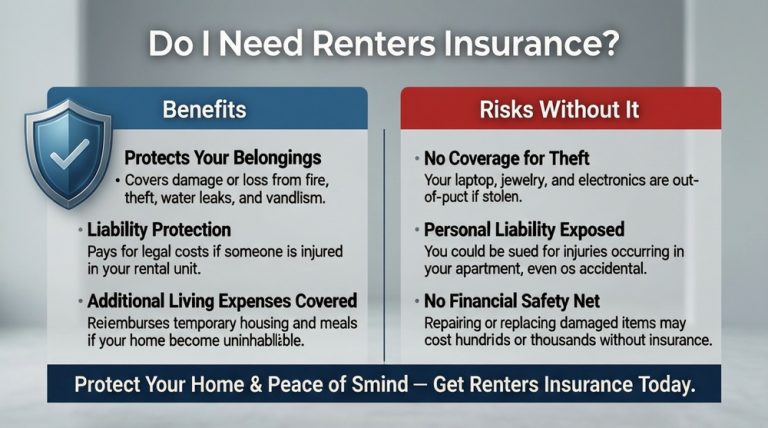
Yes, renters insurance absolutely covers burglary. Theft is a standard named peril in every renters insurance policy (HO-4 form). If someone breaks into your apartment and steals your belongings, your policy’s personal property coverage will pay to replace stolen items up to your coverage limit, minus your deductible. It also typically covers property damage caused during the break-in, such as a broken door, window, or lock. However, you must file a police report, and there are important sub-limits for high-value items like jewelry, electronics, and cash. Understanding these details is key to making a successful claim. For the basics, see our guide on what renters insurance is.
How Renters Insurance Covers a Burglary
When asking “does renters insurance cover burglary?” you’re addressing one of the core reasons the product exists. Burglary (the unlawful entry into a premises with intent to commit a crime, typically theft) falls under the broader “theft” peril. Your policy covers two main aspects of the incident: the stolen property and the damage to your dwelling caused by the forced entry.
Coverage for Your Stolen Belongings (Personal Property)
Your personal property coverage (Coverage C) applies to items taken during the burglary. This includes:
– Electronics: TVs, laptops, tablets, gaming consoles.
– Jewelry and Valuables: Subject to special sub-limits (see below).
– Clothing, furniture, and other personal items.
– Cash: Usually with a very low sub-limit (e.g., $200).
The payout is subject to your chosen coverage limit and deductible. This is a fundamental part of your renters insurance coverage.
Coverage for Damage Caused by the Burglar (Vandalism)
Vandalism is also a named peril. If the burglar breaks a window, kicks in a door, or damages walls, your policy will cover the repair costs for that damage. This is crucial because your landlord’s insurance covers the building structure, but damage to the interior of your rented unit (like a broken interior door) is often your responsibility unless caused by a covered peril like vandalism.
Critical Limitations and Sub-Limits You Must Know
While burglary is covered, policies have specific caps on certain categories of items. The following table outlines common sub-limits that directly impact a burglary claim.
| Item Category | Typical Sub-Limit for Theft | What It Means for a Burglary Claim |
|---|---|---|
| Jewelry, Watches, Furs, Precious Stones | $1,000 – $2,500 (total) | If $5,000 worth of jewelry is stolen, you may only recover up to the sub-limit (e.g., $1,500). |
| Firearms | $2,000 – $3,000 (total) | A collection worth $6,000 would not be fully covered. |
| Silverware, Goldware | $2,500 – $5,000 | Fine silver or china sets have their own limit. |
| Business Property | $2,500 (on & off premises) | Laptops or equipment used for work may be capped. |
| Money, Bank Notes, Coins, Bullion | $200 – $500 | Cash stolen from a drawer is minimally covered. |
| Electronics (General) | Part of overall property limit | Ensure your total property limit is high enough to cover all electronics. |
Overcoming Sub-Limits: Scheduled Personal Property
To insure high-value items for their full worth, you must “schedule” them. This involves getting an appraisal or receipt and adding a rider to your policy for each item. Scheduled items are covered for their appraised value, often with no deductible, and the theft sub-limit does not apply. This is essential for expensive jewelry, watches, fine art, or high-end cameras.
The Step-by-Step Claims Process After a Burglary
Acting correctly immediately after discovering a burglary is vital for your safety and a successful claim.
1. Ensure Safety & Do Not Enter: If you arrive home and see signs of break-in, do not enter. The burglar might still be inside. Call 911 from a safe location.
2. File a Police Report: This is the most important step. Wait for the police to arrive, secure the scene, and file an official report. Get the report number. No police report = no insurance claim.
3. Document the Scene (Once Safe): Take extensive photos and video of the point of entry, all damaged areas, and any ransacked rooms before you touch anything.
4. Create a Detailed Theft Inventory: List every stolen item. Include description, brand, model, serial number (if you have it), purchase date, and estimated replacement cost. A pre-existing home inventory is invaluable here.
5. Contact Your Renters Insurance Company: Report the burglary and start the claim. Provide your policy number and the police report number.
6. Secure Your Home: Board up broken windows or doors to prevent further loss. Your policy may cover these temporary repair costs. Keep receipts.
7. Work with the Adjuster: A claims adjuster will contact you. Provide your inventory and documentation. They may ask for additional proof of ownership.
8. Review the Settlement: The insurer will offer a settlement based on your covered losses, minus your deductible and applying any sub-limits.
Actual Cash Value vs. Replacement Cost
With Actual Cash Value (ACV), you’ll be reimbursed for the stolen item’s depreciated value. A 4-year-old stolen laptop might net you $200. With Replacement Cost Value (RCV), you’ll get enough to buy a new, comparable laptop—$800+. RCV coverage is highly recommended and significantly impacts your financial recovery after a burglary.
Preventing Burglaries and Maximizing Your Coverage
Prevention reduces risk and can lower premiums. Use deadbolt locks, secure sliding doors, keep valuables out of sight, and consider a security system (which may earn you a discount).
To ensure adequate coverage:
– Conduct a Home Inventory: Know the total value of your belongings to set an accurate personal property limit.
– Review Sub-Limits: Identify any items (jewelry, collectibles) that exceed standard sub-limits and schedule them.
– Choose Replacement Cost Coverage: Pay the slightly higher premium for RCV.
Understanding these elements is part of managing your overall renters insurance cost effectively. For a full review, explore all renters insurance options.

Conclusion: Your Financial Recovery Tool
In summary, does renters insurance cover burglary? Yes, comprehensively. It is your primary financial tool for recovering from the violation and loss of a break-in. By understanding the covered perils, the critical role of the police report, the impact of sub-limits, and the importance of Replacement Cost coverage, you can navigate the claims process with confidence. Take proactive steps today: create a home inventory, review your policy’s limits, and ensure your most valuable items are scheduled. That way, if the worst happens, you can focus on your safety and security, knowing your insurance will handle the financial burden.
Frequently Asked Questions (FAQ)
What if my apartment was unlocked during the burglary?
Coverage still typically applies. While insurers expect you to take reasonable care, a simple unlocked door does not usually void theft coverage. However, if you were grossly negligent (e.g., left the door wide open with a “steal me” sign), the claim could be disputed. Always lock your doors, but an unlocked door is not an automatic denial.
Does renters insurance cover burglary if I live in a high-crime area?
Yes, but your premium will likely be higher to reflect the increased risk. Insurers cannot deny coverage solely based on your zip code, but they can price accordingly. It makes having renters insurance in a high-crime area even more essential.
Are my belongings covered if they’re stolen from my car?
Yes. Renters insurance provides “off-premises” coverage, typically 10% of your total personal property limit. Items stolen from your car are covered under this provision. Damage to the car itself is covered by your auto insurance comprehensive coverage.
What if the burglar was someone I know or a guest?
If the thief is a member of your household or a named insured on your policy, the loss is not covered. If it’s a guest or someone else you know, it is still covered as theft, and you should file a police report against them. Insurance fraud (filing a false claim with a friend) is a serious crime.
Will filing a burglary claim increase my premium?
It likely will. Filing any claim, especially a theft claim, can lead to a premium increase at renewal because you are now considered a higher risk. For small losses close to your deductible, it may be more cost-effective to pay out-of-pocket.
How long do I have to file a burglary claim?
You should file immediately after filing the police report. While policies give you a window (often one year from the date of loss) to formally file, delaying can complicate the investigation, evidence gathering, and your memory of stolen items.
Where can I find more information on home security?
For authoritative tips on burglary prevention, the Insurance Information Institute’s resources on property insurance often include links to safety guides, which can help reduce your risk of being a target.